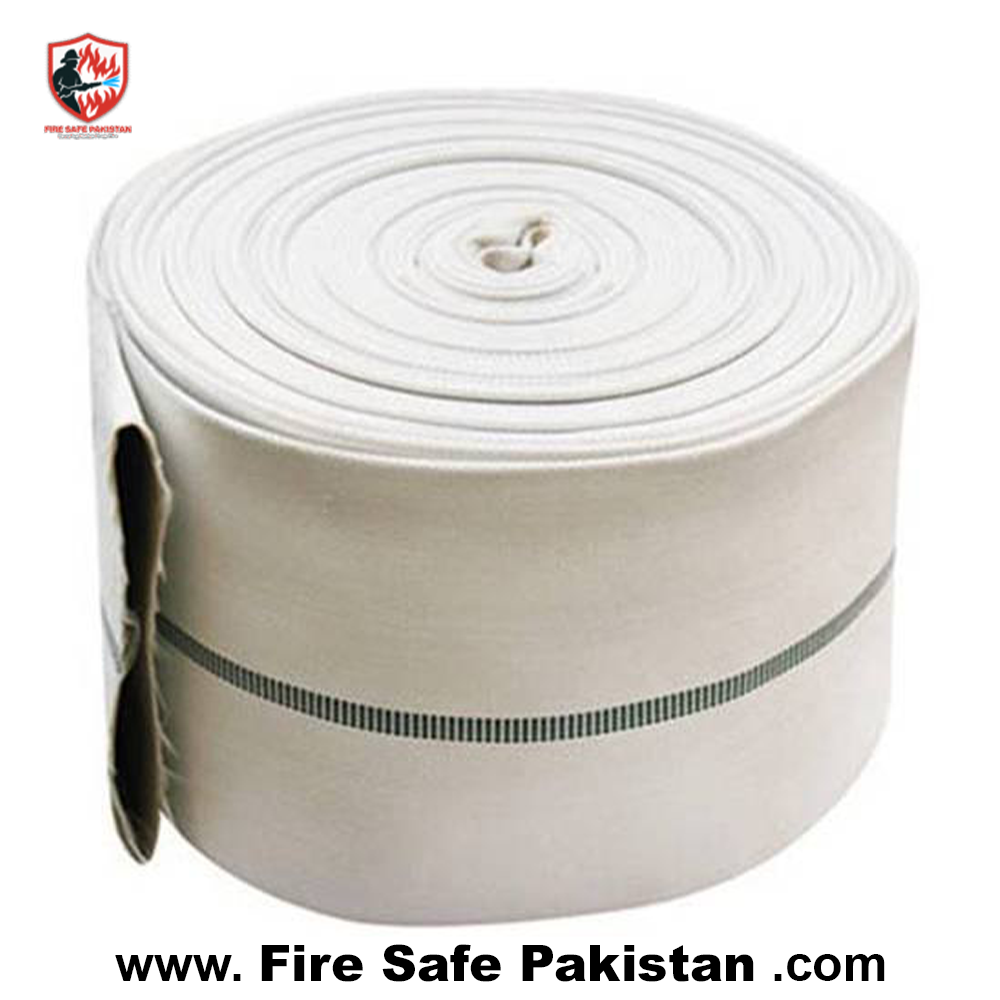
Canvas Hose Pipe 6″ (Without Couplings)
- Diameter: 6 inches
- Material: High-quality canvas
- Length: Typically available in 30m, 50m, and 100m rolls
- Working Pressure: Up to 3 bar
- Burst Pressure: 9 bar
- Usage: Water transportation only
- Temperature Range: -30°C to 80°C
- Flexibility: Highly flexible for easy handling and storage
- Weight: Lightweight design for portability
- Color: Commonly white or beige
Canvas Hose Pipe 6″ (Without Couplings) — Fire Safe Pakistan
A robust, lightweight canvas hose designed specifically for reliable water transfer. Ideal for temporary water supply lines, dewatering, irrigation, construction sites, and support use where a flexible, durable hose is required. This 6-inch canvas hose is supplied without couplings so you can fit the coupling type that suits your equipment and application.
Key features and benefits
-
Highly flexible canvas construction for easy handling, rolling, and storage.
-
Lightweight design reduces manpower needed during deployment and retrieval.
-
Designed for water-only use—safe, odorless, and non-reactive with potable water.
-
Available in practical roll lengths (30 m, 50 m, 100 m) to suit project size.
-
Reliable working pressure of up to 3 bar with a burst pressure up to 9 bar for a strong safety margin.
-
Wide temperature tolerance (-30°C to 80°C) for year-round use in most climates.
-
Neutral color (white/beige) that shows wear and damage early for easier maintenance checks.
Specifications (technical details)
-
Diameter: 6 inches (nominal)
-
Material: High-quality, weather-resistant canvas fabric with water-resistant coating
-
Standard lengths: 30 m, 50 m, 100 m (custom lengths available on request)
-
Working pressure: Up to 3 bar (do not exceed)
-
Burst pressure: Up to 9 bar
-
Temperature range: -30°C to 80°C
-
Usage: Water transportation only (not suitable for oils, fuels, chemicals or compressed air)
-
Flexibility: High — designed for rapid deployment and compact stowage
-
Weight: Lightweight construction for portability (weight varies by length)
-
Color: White or beige (standard)
Typical applications
-
Temporary water supply and distribution for events, construction sites, and emergency response.
-
Irrigation and agricultural water transfer.
-
Dewatering and site pumping during construction or excavation.
-
Support lines for firefighting or hydrant systems (where a lay-flat, water-only hose is acceptable).
-
Municipal and industrial water transfer tasks where a flexible, foldable hose is more practical than rigid piping.
Installation, handling & compatibility
-
Sold without couplings so users can attach threaded or quick-release couplings compatible with their pumps and fittings. Choose coupling materials (brass, aluminum, or stainless steel) appropriate to your pump and environment.
-
Inspect hose and fittings before each use. Ensure couplings are sized correctly to avoid leaks or stress points.
-
Unroll on a flat surface and avoid sharp bends near fittings. Use hose ramps or covers when crossing roads or walkways.
-
Avoid dragging over rough, abrasive surfaces. When necessary, use protective sleeves or chafing guards on high-wear sections.
Storage & maintenance
-
Drain completely before storage to prevent mildew and freeze damage.
-
Clean with fresh water after exposure to sand or abrasive particulates. Allow to dry fully before rolling.
-
Roll loosely and store in a cool, dry, shaded area away from direct sunlight and chemical storage.
-
Inspect regularly for abrasion, cuts, delamination, or weakened fabric. Replace if any structural damage is found.
-
Keep away from open flame and high-temperature surfaces; canvas is water-resistant but not flameproof.
Safety & usage warnings
-
For water transport only — do not use for petroleum products, solvents, compressed gases or corrosive liquids.
-
Never exceed the stated working pressure (3 bar). Burst pressure is a maximum and not a safe operating target.
-
Do not patch high-pressure failures for long-term use; replace damaged hose sections.
-
Use personal protective equipment (PPE) when deploying or retrieving long lengths to prevent strain injuries.
-
Periodically test in situ under controlled conditions to verify system integrity after long storage.